IMG-20260708-WA0052

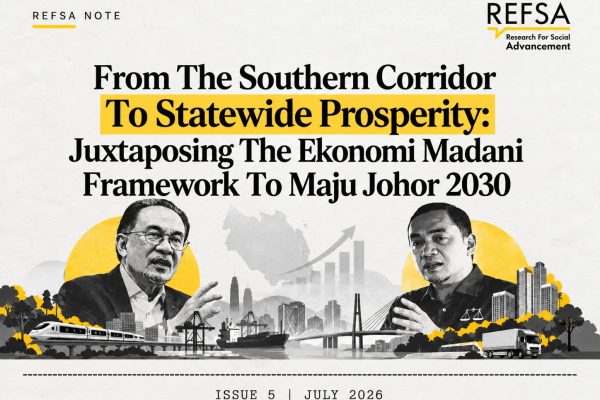
From The Southern Corridor To Statewide Prosperity: Juxtaposing The Ekonomi Madani Framework To Maju Johor 2030

By Thenesh Anbalagan and Ng Sze Fung

READ REPORT HERE

Johor’s rapid economic development should be welcomed. The JS-SEZ,

RTS Link, Iskandar Malaysia, data-centre investments, ports and industrialexpansion have strengthened Johor’s position as Malaysia’s emergingsouthern growth engine. However, Johor’s growth story cannot be centredonly on the south. Northern and central districts such as Muar, Tangkak,Segamat, Batu Pahat and Kluang have their own strengths inmanufacturing, agriculture, furniture, SMEs, logistics, tourism and foodproduction. These districts are not inactive, but they require stronger linksto high-value investment, infrastructure, supply chains and publicservices. This Note therefore encourages political parties competing in theJohor election to offer more substantive policies for northern and centralJohor. Johor does not need to slow the south in order to develop the north.It needs a deliberate statewide strategy that converts southern growthinto broader economic opportunity through better jobs, fair wages,stronger local industries, improved transport, flood resilience and greaterSME participation.

Importantly, the principle of balanced statewide growth did not originate

with Maju Johor 2030. PPMJ 2030, which was developed under formerMenteri Besar Hasni Mohammad, had already established region-baseddevelopment, balanced growth across Johor, rural economic upgradingand reduced outward migration as state priorities. Maju Johor 2030 shouldtherefore be understood less as an entirely new development philosophythan as a later consolidation of several ideas already articulated moresystematically under PPMJ 2030.

The objective should be equitable development: not identical projects in

every district, but sufficient jobs, infrastructure, public services andeconomic opportunities to allow Johoreans to build secure and fulfillinglives within their own communities.

Johor’s rapid economic development should be welcomed. The JS-SEZ, RTS Link, Iskandar Malaysia, data-centre investments, ports and industrial expansion have strengthened Johor’s position as Malaysia’s emerging southern growth engine. However, Johor’s growth story cannot be centred only on the south. Northern and central districts such as Muar, Tangkak, Segamat, Batu Pahat and Kluang have their own strengths in manufacturing, agriculture, furniture, SMEs, logistics, tourism and food production. These districts are not inactive, but they require stronger links to high-value investment, infrastructure, supply chains and public services. This Note therefore encourages political parties competing in the Johor election to offer more substantive policies for northern and central Johor. Johor does not need to slow the south in order to develop the north. It needs a deliberate statewide strategy that converts southern growth into broader economic opportunity through better jobs, fair wages, stronger local industries, improved transport, flood resilience and greater SME participation. Importantly, the principle of balanced statewide growth did not originate with Maju Johor 2030. PPMJ 2030, which was developed under former Menteri Besar Hasni Mohammad, had already established region-based development, balanced growth across Johor, rural economic upgrading and reduced outward migration as state priorities. Maju Johor 2030 should therefore be understood less as an entirely new development philosophy than as a later consolidation of several ideas already articulated more systematically under PPMJ 2030. The objective should be equitable development: not identical projects in every district, but sufficient jobs, infrastructure, public services and economic opportunities to allow Johoreans to build secure and fulfilling lives within their own communities.

Your Cart
SUPPORT US