By Thenesh Anbalagan and Ng Sze Fung
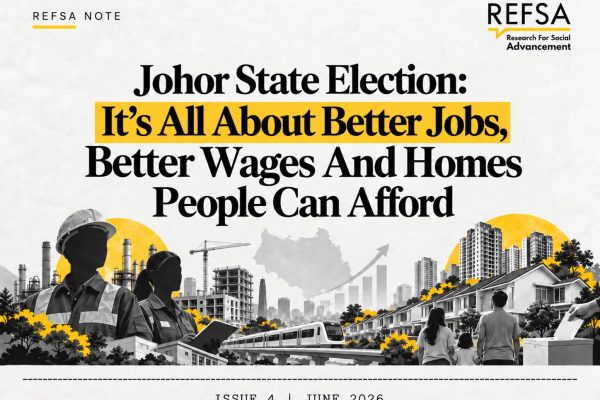
Recent claims that Johor is “stepping ahead” should be treated with caution. Johor’s growth, investment momentum and employment expansion are real and should be welcomed. But a fuller comparison with Selangor and Penang shows that headline growth is not enough. Johor still falls behind on key measures that matter to households: wage levels, job quality, investment depth, industrial ecosystem strength and housing affordability. The real question is not whether Johor is developing. It clearly is. The real question is whether this development is broad-based, high-value and felt by ordinary Johoreans. Growth must be judged not only by GDP or approved investment figures, but by whether workers earn more, local firms benefit, young people can access skilled jobs, and families can afford homes near where they work. In short, Johor must pursue job-led growth, not merely investment-led growth.
This is especially urgent because Johor sits next to Singapore. Its proximity is a major advantage, but it can also become a trap if Johor does not raise wages, create better jobs and protect housing affordability. Johor must benefit from Singapore’s growth without being sucked into a model where its labour, land and development are shaped mainly by Singapore-linked demand. This note therefore argues that Johor should be understood as part of Malaysia’s total development: Penang anchors the north, Selangor powers the centre, and Johor must unlock the south. Johor has the ingredients to become Malaysia’s southern engine, but those advantages have not been fully activated. To do so, Johor needs better policies, better candidates and better governance. This is particularly important for Gen Z Johoreans, who will inherit the consequences of today’s policy choices. The Johor State Election should therefore cut through the rhetoric and focus on the real issues: better jobs, better wages and homes people can afford. Johor is not yet ahead. It is in transition. That is why Johoreans must get ready to vote, demand more and build back better.